
Community Health & Advocacy
Diabetes management myths in Florida Hispanic communities
Diabetes conversations can lose trust before a treatment plan is even discussed. A patient may have heard that insulin causes blindness, that a sudden fright brought on diabetes, or that a home remedy can cure it.
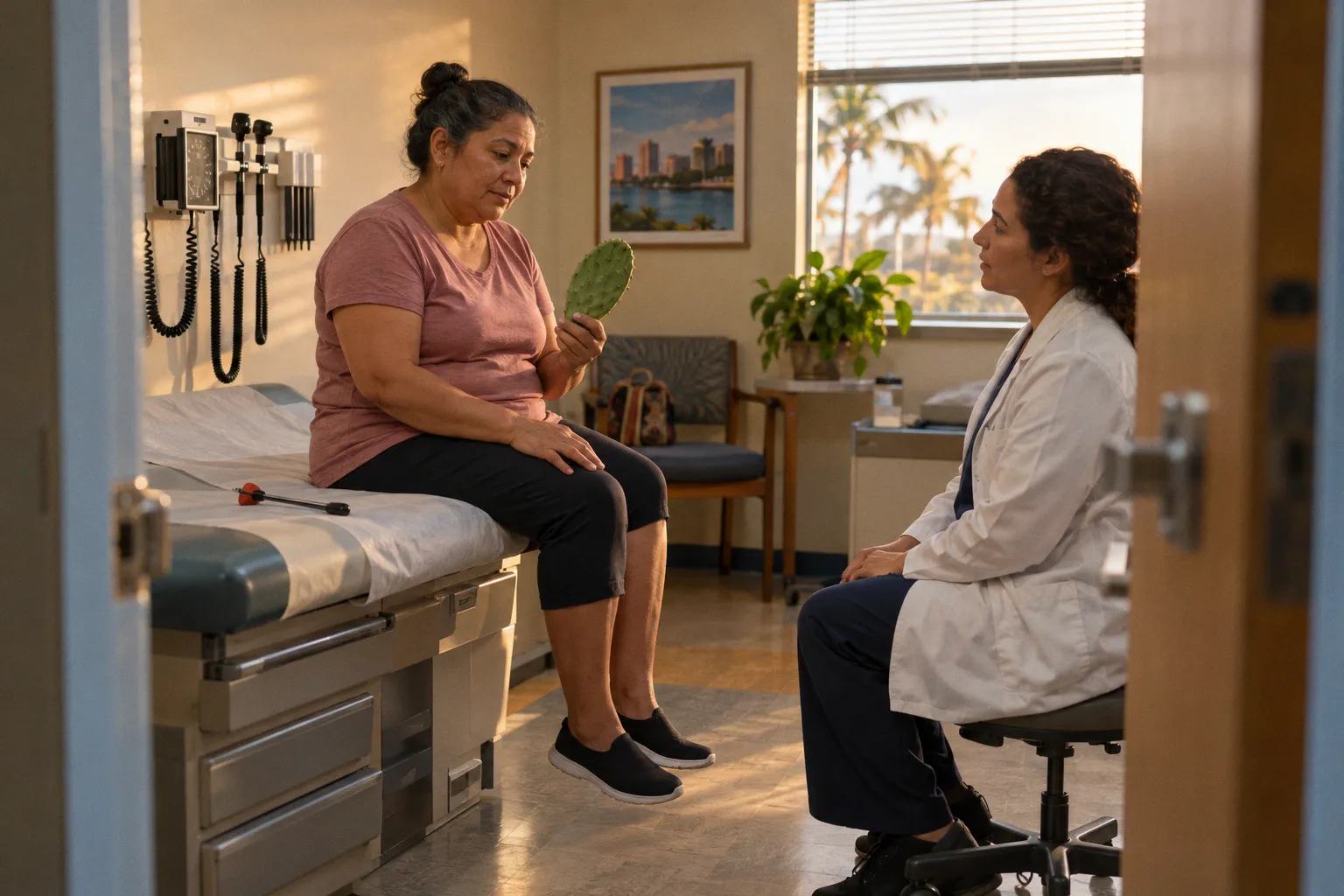
When clinicians dismiss those beliefs without asking where they came from, the medical facts may be correct—but the conversation can still fail.
That gap matters in Florida, where Latino communities are diverse in language, migration history, food traditions, and access to care. Research comparing Latinx adults in Miami-Dade and Escambia County found that participants generally understood diabetes was serious, yet neither group clearly understood the difference between Type 1 and Type 2 diabetes. Miami participants reported fewer language and cultural barriers than those in Pensacola, a reminder that access and understanding can vary even within one state. Diabetes management myths in Hispanic communities are not simply errors to correct; they are part of the real-world context in which patients make decisions.
Cultural beliefs shape how diabetes is understood
A diagnosis arrives in a person’s life, not in a vacuum. Family advice, community experience, faith, language, and previous encounters with healthcare all influence how someone interprets a new medication or symptom. Some beliefs are passed between generations; others grow out of fear, limited access to clear information, or experiences of illness among relatives.
The stakes are significant. Hispanic and Latino adults in the United States are 66 percent more likely to be diagnosed with diabetes than non-Latino White adults, according to the American Diabetes Association. That figure does not describe every community or explain the reasons behind individual diagnoses. It does make clear why accessible, respectful diabetes education is a public health priority.
A Florida focus group study conducted in Miami and Pensacola in 2014–2015, and published in 2018, found that participants recognized diabetes as a serious condition but did not distinguish well between Type 1 and Type 2. That distinction matters because the conditions have different causes and treatment needs. Type 1 diabetes is not caused by eating too much sugar or by a frightening event. Type 2 diabetes involves the body’s ability to use insulin effectively and develops through a complex mix of biological and environmental factors.
A rushed explanation can leave patients with labels but little understanding. A more useful conversation checks what the person has heard, what they are worried about, and what they want to know next. For a clinician, that may mean explaining the diagnosis in plain language and inviting a patient to bring a family member into the discussion if they wish. For community health workers, it can mean making education available in the languages people use at home and in familiar settings, not only in a clinic exam room.
Trust is not a soft extra in diabetes care. It is part of how accurate information reaches the people who need it.
Insulin fears deserve a direct, compassionate answer
One persistent misconception is that insulin causes blindness, kidney failure, or lower-limb amputations. These complications are associated with prolonged high blood glucose and other health factors—not with insulin itself. For some patients, insulin becomes part of treatment because the body needs help managing blood sugar; delaying it out of fear can make it harder to bring glucose under control.
The fear should not be treated as stubbornness. A person may have watched a relative begin insulin around the same time that complications became visible. The timing can make the medication seem responsible, even when the underlying diabetes had been uncontrolled for years. Others may have heard warnings from family or neighbors who were trying to protect them.
A productive response makes room for the story, then clarifies the medical picture without blame. Clinicians can explain why insulin has been recommended, what the treatment is intended to do, how it is taken, and what questions or side effects should prompt a call. They can also ask what the patient has heard about insulin rather than assuming the concern is already known.
For patients, it is reasonable to ask:
- What is insulin expected to help with in my situation?
- How will I learn to use it safely?
- What should I do if my blood sugar is too high or too low?
- Are there costs, supplies, or language needs that could make this plan difficult to follow?
These questions are not a challenge to the care team. They are a way to make a treatment plan workable. If insulin has been prescribed, patients should not stop or change it on their own; they should contact their healthcare professional to discuss concerns and alternatives where appropriate.
The same principle applies to other prescribed diabetes medicines. A supplement or home remedy may feel familiar, but it is not automatically safe alongside medication. A pharmacist or clinician can help review possible interactions and explain what is known.
Susto, stress, and the search for an explanation
Some Spanish-speaking patients describe diabetes as beginning after susto—a sudden fright or intense emotional shock—or after a traumatic experience. A frightening event can affect sleep, appetite, stress levels, and a person’s ability to manage an existing health condition. But it is not a direct physiological cause of Type 1 or Type 2 diabetes.
That distinction can be explained without dismissing the emotional experience. If someone connects a diagnosis to a period of grief, violence, displacement, or another shock, a clinician can acknowledge that the event may have been deeply affecting while clarifying that diabetes develops through other biological processes. Stress support may still be important for the person’s overall health and ability to manage care.
This is a cultural bridge in practice: not accepting an inaccurate explanation as medical fact, but not treating the person who holds it as misinformed or careless. Outreach workers and clinicians can ask what the patient means by susto, whether the stress is ongoing, and what support would help. When distress is persistent or interferes with daily life, a healthcare professional can discuss appropriate mental health support.
The same care is needed when discussing home remedies. Aloe vera, nettle infusions, and prickly pear cactus, or nopales, are sometimes believed to cure diabetes. Some research suggests nopales may have a blood-sugar effect, but no natural remedy has been shown to cure diabetes or replace prescribed medicine and glucose monitoring. A patient who uses an herbal product should tell the care team, both to avoid possible interactions and to make sure the treatment plan accounts for it.
A useful exchange does not demand that people abandon every family practice before they can receive care. It separates practices that may bring comfort or fit into meals from claims that could lead someone to stop monitoring glucose or skip prescribed treatment.
Food advice must fit the person, not a stereotype
Dietary myths do not only come from patients. Healthcare providers can also make assumptions—such as believing all Latino patients eat corn tortillas or follow the same meal pattern. In reality, food traditions differ across countries and regions. A Caribbean household may rely more on rice and plantains, while tortillas may be more common in parts of Mexico and Central America. Individual routines vary further with income, work schedules, family preferences, and access to fresh food.
Advice that ignores those differences may be technically correct but impossible to use. Telling someone to remove a staple food without asking how it is prepared, what it is served with, or what alternatives are affordable can make diabetes management feel like a demand to give up familiar meals. More practical counseling starts with the food a person actually eats and looks for adjustments they can sustain.
A clinician or dietitian might explore:
- Which meals are most important to the patient and their family.
- How portion size, cooking methods, and meal timing affect blood sugar.
- Whether the patient has reliable access to food and a place to prepare it.
- What substitutions make sense within their budget and cultural food traditions.
The aim is not to label one cuisine as healthy or unhealthy. It is to help each person understand how food, medication, activity, and glucose readings relate to their own care. Diabetes education for Dominican patients, like education for other Latino groups, works best when it recognizes both shared needs and meaningful differences rather than treating a broad identity as a single menu.
Outreach can make evidence-based care easier to reach
A clinic visit is only one part of diabetes care. Community health fairs, bilingual education, trusted local organizations, and trained health workers can help people ask questions earlier and connect with ongoing care. These efforts are especially useful when a patient has faced language barriers, has limited time away from work, or is uncertain about where to seek help.
The Miami–Escambia comparison points to the importance of local context: participants in Miami reported fewer language and cultural barriers than those in Pensacola, even though both groups were in Florida. A statewide message cannot assume that every community has the same resources or faces the same obstacles. Local outreach can identify what is missing—an interpreter, a clear explanation of medication, affordable follow-up, or simply a place where questions are welcomed.
Community programs can also help clinicians hear what patients are hearing outside the clinic. When a myth about insulin or a home cure is circulating, outreach workers can share the concern with care teams and help shape education that addresses the actual question. That work is not a substitute for individualized medical care. It is a way to build patient trust and make accurate information easier to understand and act on.
For someone living with diabetes, the next step can be modest: ask the care team to explain one concern in plain language, bring a trusted relative to an appointment, or disclose a remedy being used at home. For healthcare professionals and community organizations, the work is shared: listen before correcting, provide information in the languages people use, and make a treatment plan realistic for daily life.
Diabetes myths do not disappear because a flyer says they are wrong. They lose their hold when people can ask questions without shame, receive evidence-based answers that respect their experience, and find support close to home.