Association & Leadership
Community health outreach strategies for Florida Latino groups
Hispanic residents make up 27.4 percent of Florida’s total population, according to U.S. Census Bureau estimates cited by the U.S. Department of Health and Human Services Office of Minority Health.
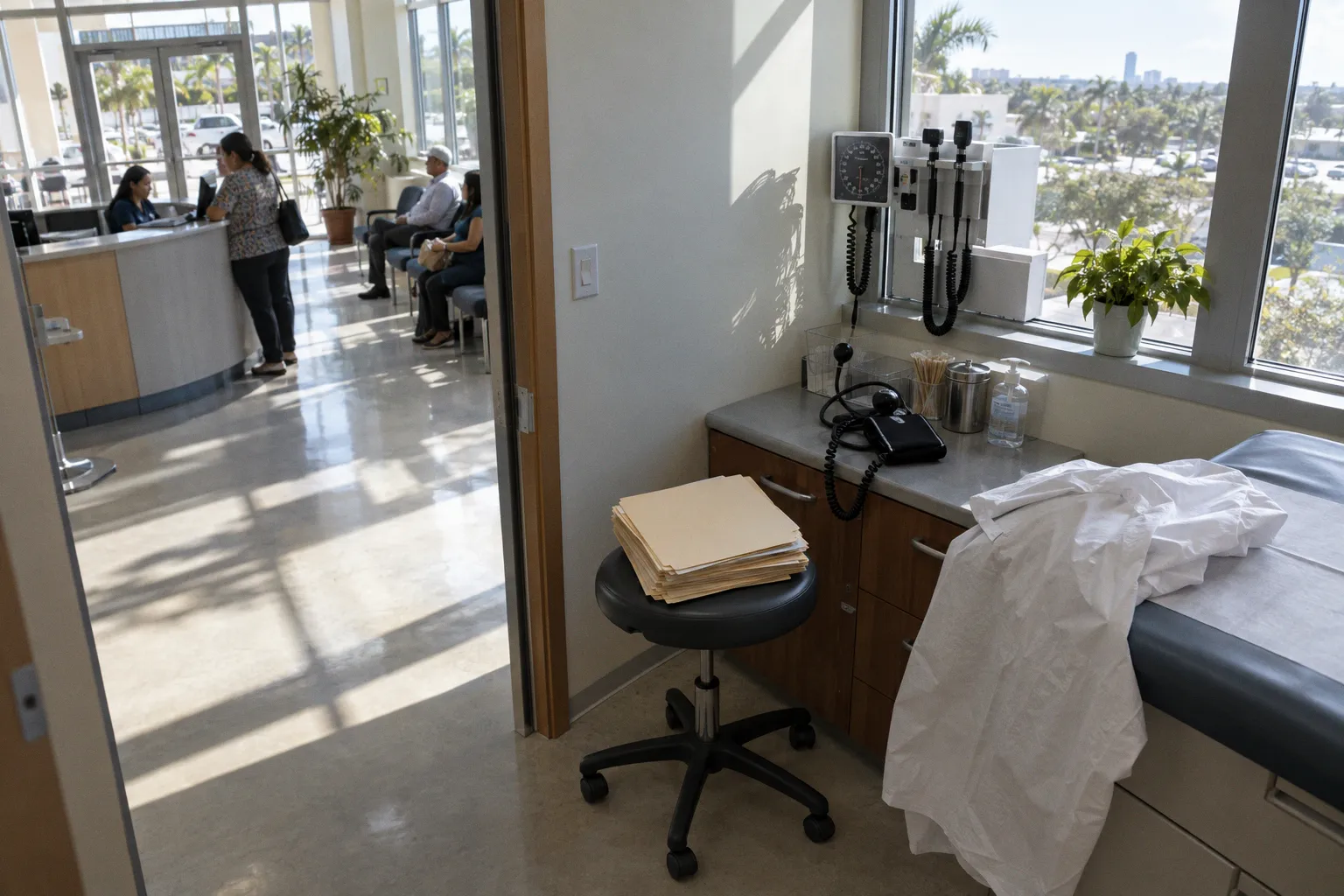
That single number helps explain why a healthcare system built around English-language intake, uniform paperwork, and one-size-fits-all workflows keeps underperforming in the waiting rooms where many of those residents actually sit.
The gap appears in specific places. It appears in a Medicaid renewal notice that is mailed but never opened. It appears in a screening that flags high blood pressure but produces no follow-up appointment. It appears, most quietly, in the moment when a promotora recognizes a patient before the front-desk receptionist does.
Effective community health outreach strategies for Florida Latino populations are not a matter of translating a brochure or adding a Spanish-language tab to a website. They are the slower, layered work of matching language, culture, geography, and trust to a healthcare system that was built, for most of its history, around other assumptions. Whether that work becomes durable infrastructure or remains a patchwork stitched together grant cycle by grant cycle is the question facing every Dominican physician, nurse, community health worker, and allied health professional in the state.
The Promotores de Salud Model: Leveraging Trusted Community Voices
The community health worker — promotores de salud in many Spanish-speaking communities — is one of the most consistently documented bridges between Latino households and the formal care system. The model’s premise is straightforward and quietly radical: trusted people from within the community conduct outreach, provide health education, navigate social services, and connect uninsured or limited-English-proficient residents with care.
The power is not in clinical training, which is intentionally limited. The power is in trust, context, and persistence.
Outreach is what happens in the eleven months between health fairs, not the eight hours they run.
A neighbor with a blood pressure cuff in her car can be more credible in some communities than a hospital with a five-page intake form. That does not mean the hospital is unnecessary. It means that the hospital is often asking for trust before it has earned it, while the promotora begins with a relationship that already exists.
The model’s strength is its flexibility. Promotores can work in dense corridors such as Miami-Dade, in agricultural communities around Homestead, or in the diaspora networks stretching from Little Santo Domingo in Allapattah to newer Dominican enclaves in Central Florida. They can carry diabetes education door to door, help a family understand a Medicaid renewal, explain why a referral matters, or sit with an older patient until a phone interpreter becomes available.
They also reach people who are not easily described by the usual language of healthcare access. Some residents are uninsured. Others have coverage but do not know how to use it. Some have a regular source of care but cannot take time off work for repeated appointments. Others are reachable only through churches, neighborhood businesses, schools, employers, or family networks. Calling all of them “underserved” can hide the operational problem: many are not refusing care. They are unreached because no one has built a practical path to it.
For Dominican healthcare professionals, the implications are immediate. A promotores model allows clinicians to extend their reach without simply extending their hours. A physician in Hialeah who partners with a local promotora can be present in more conversations without duplicating every conversation herself. The same structure supports nurses running chronic disease coaching, social workers tracing families lost between coverage renewals, and allied health specialists whose expertise too often stops at the clinic door.
That partnership requires more than sending referrals to a community worker. The clinical team has to define what happens after the referral, what information can be shared, how follow-up is recorded, and who is responsible when a patient does not appear. Without that structure, the promotora becomes an informal safety net carrying institutional responsibilities without institutional support.
Trust is an operating system, not a slogan
Cultural competency in Florida medical outreach is often reduced to language matching. Language is essential, but it is not the whole system. A patient may understand the words on a form and still distrust the institution behind it. A family may speak Spanish at home while using English at work. An older Dominican patient may rely on a relative to interpret a message, while a younger family member may be more comfortable with a text message than a phone call.
Effective programs ask practical questions:
- Who is the trusted messenger for this neighborhood?
- Can the patient act on the information with the transportation, time, and technology available to them?
- Does the message explain what happens next, or does it merely describe a health risk?
- Is follow-up assigned to a person rather than left to the patient?
- Does the program work with community organizations that residents already recognize?
The answers will differ between Miami-Dade, Volusia County, Orlando, Tampa, and smaller communities. That variation is not a weakness. It is the reason a single statewide outreach script rarely performs as well as a locally adapted one.
Scaling Grassroots Success: Lessons from HHI and Hispanic Federation Initiatives
Hispanic Health Initiatives, Inc. — a 501(c)(3) nonprofit that began offering free bilingual health screenings, health education, and patient navigation in Volusia County in 2001 — is one of the clearest examples of what scaled grassroots outreach actually looks like.
It did not begin with a grant portfolio or a countywide contract. It began with screenings. The important part of the model is what happened after the screening: education for people identified as being at risk, navigation for residents who needed care, and an effort to connect uninsured patients with a primary care home.
Nearly a quarter century later, the structure remains recognizable. HHI’s community-based screenings take place in Spanish and English, but the bilingual format is only the entry point. The larger contribution is the connection between a temporary encounter and an ongoing care relationship. A blood pressure reading has limited value if the patient leaves without understanding the result, knowing where to go next, or having help arranging that next step.
The model also challenges a common assumption in public health planning: that the resident must first enter the healthcare system before the system can help. HHI’s approach reverses that sequence. The system comes to the parking lot of a church, the lobby of a community center, or another place where residents already gather. The first interaction is designed around access rather than institutional convenience.
The Hispanic Federation has built a complementary approach. Through initiatives such as Ser Saludable and Por Nosotros/Nosotras, the Federation hosts community health fairs offering free screenings in major Florida cities, including Miami and Orlando, and connects those events with continuing wellness programming. The fairs are the visible part of the work. Navigation and follow-up are the substance.
Both organizations depend on local partners that already carry the trust of the residents being served. That arrangement matters because an organization can provide clinical expertise without possessing neighborhood credibility. Conversely, a trusted community group may know exactly which families need help but lack the capacity to provide screening, referral, or follow-up on its own. The strongest programs treat those differences as complementary rather than competitive.
The event is the doorway, not the program
What HHI and Hispanic Federation initiatives demonstrate is that outreach is an arc:
1. A resident encounters the program in a familiar setting.
2. A screening or conversation identifies a health concern or access problem.
3. Education translates the result into something the resident can understand.
4. Navigation connects the resident to a clinic, benefit, specialist, or social service.
5. Follow-up determines whether the connection held.
The arc breaks when any step is missing. In Florida, the missing step is often navigation. A health fair can identify elevated blood pressure, but it cannot by itself create a primary care relationship. A bilingual flyer can explain Medicaid renewal, but it cannot guarantee that the form was completed. A referral can be placed, but it does not ensure that the patient had transportation, understood the appointment instructions, or received a reminder in the language they use at home.
| Approach | Anchor or lead | Core activity | Best-fit setting |
|---|---|---|---|
| Promotores de Salud network | Community-based lay health workers | Home visits, health education, and service navigation | Neighborhood-scale outreach across Florida |
| Bilingual free screenings | Hispanic Health Initiatives, Inc. | Screenings paired with education and patient navigation | Volusia County and broader Central Florida |
| Regional health fairs | Hispanic Federation initiatives such as Ser Saludable and Por Nosotros/Nosotras | Periodic fairs with screenings and wellness education | Miami, Orlando, and other major cities |
| Research and language-accessible resources | USF Salud Latina | Outreach, education campaigns, community research, and materials | Tampa-based work with broader relevance |
| State-level equity coordination | Florida Department of Health Office of Minority Health | Cross-agency coordination and policy support | Statewide infrastructure |
The table is useful only if it leads to a question about handoffs. Who receives the patient after the screening? Who confirms that the referral was completed? Who learns from the cases that did not move forward? Programs become durable when those questions are answered before the event begins.
Institutional Frameworks: The Role of USF’s Salud Latina and State Health Equity Offices
Grassroots work reaches further when institutions reinforce it without swallowing its local character.
In January 2021, the University of South Florida’s College of Public Health established the Salud Latina initiative to address public health issues in Latino communities through language-accessible resources, community outreach, health education campaigns, and research. Salud Latina’s value is not limited to the materials or reports it produces. It can also give smaller organizations access to research capacity, evaluation tools, and a level of institutional credibility that is difficult to build from the ground up.
A promotora who can provide a Spanish-language diabetes guide developed or supported by a public health institution is working with more than a handout. She is offering a resource that can help structure a conversation, support consistent education across outreach sites, and give a clinician a shared reference point for follow-up. That does not replace local knowledge. It makes local knowledge easier to connect with clinical and public health systems.
The state-level framework is different. The Florida Legislature established the Office of Minority Health and Health Equity under section 20.43(9) of the Florida Statutes to coordinate health equity initiatives and address health disparities within the Florida Department of Health. Its work is less visible than a health fair. It operates through policy support, coordination, and relationships across agencies and programs.
For a Dominican physician or allied health professional trying to expand a community initiative, that kind of office can serve as an entry point to state-level resources that are otherwise scattered. It may not provide the neighborhood trust required to reach a patient, but it can help a local program understand where its work fits within wider health equity priorities.
These structures were not created specifically for Dominican healthcare professionals. They are nevertheless part of the scaffolding that Dominican-led and Latino-led programs can use as they grow. The opportunity is to engage them actively rather than treat them as distant administrative bodies.
That engagement is particularly important for professionals moving between clinical practice, community advocacy, and organizational leadership. A Dominican physician may understand the clinical consequences of delayed care but need a community partner to address transportation or documentation barriers. A nurse may know that patients are missing renewals but lack the time to conduct repeated outreach. A community association may have the relationships but need a formal referral pathway. Institutional partnerships work when each participant is clear about the problem it can solve and the problem it cannot.
Navigating Legislative Shifts: HB 855 and the Future of Data-Driven Health Equity
The next major lever for Latino health equity in Florida is not an outreach event. It is a reporting requirement that may make gaps easier to see.
Under Florida House Bill 855, passed in 2022, Medicaid managed care organizations in the state are required to stratify and publicly report performance-measure data by race, ethnicity, primary language, sex, and disability status beginning in 2026.
The confirmed obligation is specific. It applies to Medicaid managed care organizations, and it concerns public reporting of stratified performance data. It does not establish a general reporting duty for hospital systems, and it should not be described as proof that every gap will appear in a public dashboard or that the state has never reported comparable information before.
That distinction matters because policy language often travels farther than the underlying requirement. Once a measure is repeated in presentations, grant applications, or advocacy materials, the responsible institution can become blurred. Community organizations need to know whether a data point belongs to a Medicaid managed care organization, a hospital, a county health department, or another entity. Otherwise, the advocacy built around the data is aimed at the wrong decision-maker.
For outreach programs, the 2026 requirement may still be strategically important. Data organized by race, ethnicity, primary language, sex, and disability status can make it easier to ask whether a program is reaching the people it intends to reach. It may help advocates compare patterns across measures such as chronic disease management, prenatal care, behavioral health follow-up, or childhood immunization, provided those measures are included in the relevant reporting structure.
But stratification does not automatically produce an intervention. A report can identify a disparity without explaining why it exists. It may show a difference associated with primary language without revealing whether the cause was interpretation, transportation, scheduling, outreach, documentation, or a shortage of providers. It may reveal a problem for a Medicaid managed care organization without showing which community partner is best placed to address it.
That is where community organizations and healthcare professionals matter. They can interpret the numbers against local experience:
- A low follow-up rate may reflect appointment availability rather than patient refusal.
- A gap by primary language may reflect the quality of interpretation, not simply the absence of translated materials.
- A coverage-related measure may be affected by renewal paperwork, address changes, unstable work schedules, or limited digital access.
- A difference between neighborhoods may reflect transportation and clinic distribution as much as clinical practice.
The 2026 reporting duty is therefore a tool for accountability, not a substitute for outreach. Its value will depend on whether managed care organizations, clinicians, advocates, and community groups use the information to change how services are offered.
Data can show where the system is failing. It cannot, by itself, build the relationship that makes care possible.
Bridging the Gap: Addressing Procedural Barriers for Uninsured Populations
Perhaps the clearest case for sustained community outreach comes from the Medicaid redetermination process. During the nationwide unwinding of continuous Medicaid enrollment, roughly 70 percent of terminations were attributed to procedural or paperwork issues rather than a completed determination that the person no longer qualified.
That figure needs to be read carefully. A procedural termination means that a case was closed because the renewal process was not completed or required information was not received. It does not establish that every affected person met the income or other eligibility rules. It does establish that the administrative process itself played a major role in coverage loss.
A renewal notice can arrive in English. A household can change addresses without updating every agency. A confirmation process can require digital access that is unreliable or unavailable. A family can submit paperwork and still be unsure whether the submission was received. These are not abstract administrative details. They determine whether a patient remains connected to primary care, prescriptions, prenatal services, behavioral health support, or specialist referrals.
When a renewal notice arrives in a language the household does not use for official paperwork, the barrier is not solved by mailing the notice twice.
The practical responses are equally procedural:
- Bilingual renewal reminders should explain the action required, not merely announce that a renewal is due.
- Community navigators should be able to help residents understand notices and identify the next step.
- Outreach should use more than one channel, including trusted organizations and direct contact where appropriate.
- Clinics should ask whether coverage is stable instead of waiting for a claim to fail.
- Referral systems should account for the possibility that a patient loses coverage between visits.
- Programs should document recurring obstacles so that advocacy can address the process, not only individual cases.
For Dominican healthcare professionals across Florida, the implication is direct. Outreach is not separate from clinical practice. It is the connective tissue that determines whether clinical practice reaches the patient at all.
A Dominican nurse in Hialeah who spends part of the week helping patients understand renewal paperwork is doing equity work that may not fit neatly into a clinical productivity measure. A community association that helps residents locate a navigator is performing a form of health system repair. A physician who asks about language preference, transportation, and coverage continuity is identifying risks that may never appear in the diagnosis field.
The work also intersects with professional responsibility in a broader sense. Clinicians trained outside Florida or working through Dominican professional networks may bring valuable language skills, cultural knowledge, and community credibility, but those assets need to be connected to lawful clinical roles, established referral systems, and appropriate institutional support. Community outreach should expand access without blurring the boundaries between health education, navigation, and licensed medical care.
That balance is especially important when organizations are recruiting volunteers, partnering with clinics, or developing services for uninsured residents. A trusted community member may be the right person to explain a form, identify a transportation problem, or help a patient prepare for an appointment. That same person should not be placed in the position of making clinical decisions or representing a service as medical care when it is not.
Building continuity beyond the grant cycle
The strongest outreach models in Florida are not necessarily the ones with the largest budgets or the most visible fairs. They are the ones that have built continuity: the screening that turns into navigation, the navigation that turns into a primary care relationship, and the primary care relationship that survives the next renewal cycle.
Continuity requires design. It requires someone to own the follow-up, a way to record what happened, a referral destination that can receive the patient, and a plan for what happens when the first attempt fails. It also requires humility about what a single organization can do. A community group cannot solve every transportation problem. A hospital cannot create neighborhood trust by issuing a press release. A Medicaid managed care organization cannot improve a measure simply by publishing it.
The work is distributed across the system. Community health workers create the first bridge. Nonprofits and faith-based organizations provide familiar settings. Clinicians translate outreach into care. Universities contribute research and evaluation. State offices coordinate policy. Medicaid managed care organizations report performance data that can help show where disparities persist.
That division of labor is not a reason to wait for a perfect statewide program. It is a reason to make each handoff more deliberate.
For Latino public health program implementation in Florida, the central test is simple: can a resident move from first contact to meaningful care without having to reconstruct the system alone? If the answer is no, then another fair, brochure, or screening will not close the gap by itself.
Community health outreach strategies for Florida Latino populations succeed when they respect the difference between visibility and access. A health fair creates visibility. A trusted navigator creates access. A public report creates visibility. A managed care organization changing its outreach and follow-up creates access.
Florida’s next phase of health equity work will need both. It will need better information about who is being missed, and it will need the community relationships capable of reaching those residents. The numbers can direct attention. The relationships determine whether anything changes.